
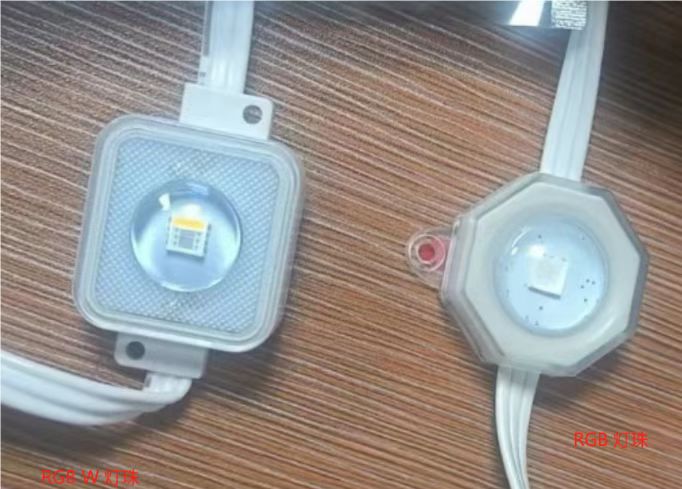
- RGB: 3 diodes (Red, Green, Blue) — creates white by mixing all three at full intensity, resulting in a blue-tinted “pseudo-white” around 8000K+
- RGBW: 4 diodes (Red, Green, Blue + dedicated White) — produces true white at 2700K (warm) or 6500K (cool), indistinguishable from a dedicated white light
- Color accuracy: RGBW covers 90%+ of the visible color gamut vs RGB’s approximately 70% — particularly noticeable in pastels, warm tones, and whites
- Power consumption: RGBW uses slightly more power at full white (4 diodes vs 3), but roughly equal for colored effects
- Cost difference: RGBW typically costs 15-25% more per pixel than RGB, offset by not needing a separate white light system
- Lifespan impact: RGBW’s dedicated white diode means the colored diodes aren’t burned at full intensity to make white — extending overall LED lifespan by an estimated 20-30%
- Industry trend: Major permanent lighting brands have shifted to RGBW as the default since 2024; RGB is increasingly positioned as a budget alternative
When pitching a permanent lighting solution to a client, one of the most common technical questions is: “Should I go with RGB or RGBW?” Understanding the difference is key to setting expectations and closing the sale — and honestly, getting it wrong can cost you a callback.
I’ve been manufacturing both RGB and RGBW pixel lights for over a decade, and I’ve seen the industry shift decisively toward RGBW. But that doesn’t mean RGB is obsolete — it still has its place. In this guide, I’ll break down the real-world differences, when each option makes sense, and how to explain the choice to your clients in language they understand.
What Is RGB Lighting?
RGB stands for Red, Green, Blue — the three primary colors of light. An RGB pixel light contains three LED diodes, one for each color. By varying the intensity of each diode, the pixel can produce millions of colors.
Here’s the catch: when you want white light, an RGB pixel turns all three diodes on at full intensity. The result? A “white” that’s actually a blend of red, green, and blue light. It looks white-ish, but if you put it next to a real white LED, the difference is obvious. RGB white typically reads as cool, slightly blue, or even slightly purple — around 8000K to 10000K on the color temperature scale, compared to the warm 2700K white that most people find appealing for architectural lighting.
Think of it like mixing paint: if you mix red, yellow, and blue paint together, you get a muddy brownish-gray — not a clean white. Light mixing works differently (it’s additive, not subtractive), but the principle is similar: combining three colored sources never produces a truly clean white.
What Is RGBW Lighting?
RGBW stands for Red, Green, Blue + White. An RGBW pixel light contains four LED diodes — the same three as RGB, plus a dedicated white LED. This white diode is typically available in warm white (2700K), cool white (6500K), or sometimes both.
The difference is immediately visible. When you select white on an RGBW system, only the dedicated white diode activates. The result is a clean, true white that looks identical to a high-quality architectural LED — because it is one. No color mixing, no blue tint, no compromise.
For colored effects, the RGBW system uses the three color diodes just like RGB. But it can also blend the white diode with colors to create pastels, warm tones, and subtle hues that RGB simply can’t reproduce. Think soft peach, warm amber, or candlelight orange — these all require a white diode to look right.
Side-by-Side Comparison: RGB vs RGBW
| Feature | RGB | RGBW |
|---|---|---|
| Number of diodes | 3 (R, G, B) | 4 (R, G, B, W) |
| True white capability | ❌ Blended white (8000K+, blue-tinted) | ✅ Dedicated white (2700K warm / 6500K cool) |
| Color gamut coverage | ~70% of visible spectrum | 90%+ of visible spectrum |
| Pastel / warm tones | Poor — muddy and washed out | Excellent — clean and accurate |
| Power (full white) | ~0.6W per pixel (3 diodes at full) | ~0.8W per pixel (4 diodes) |
| Power (color effects) | ~0.4-0.6W | ~0.4-0.6W (similar) |
| Cost per pixel | Lower (baseline) | +15-25% over RGB |
| Lifespan (estimated) | 30,000-50,000 hours | 40,000-60,000 hours (white diode reduces wear on color diodes) |
| Best application | Holiday color displays, budget projects | Permanent architectural lighting, year-round use |
When RGB Makes Sense
RGB isn’t a bad choice — it’s a purpose-driven choice. Here’s where RGB still wins:
1. Pure Holiday Color Displays
If the installation is specifically for Christmas, Halloween, or other seasonal events where the lights will display red, green, blue, and other saturated colors 95% of the time, RGB does the job well. The “white” issue only matters if you actually use white — and for many holiday displays, white isn’t a primary color.
2. Budget-Constrained Projects
RGB pixels cost 15-25% less than RGBW. On a 200-foot roofline with 400 pixels, that’s a meaningful savings. If the client’s budget is tight and they’re primarily interested in color effects, RGB is a legitimate choice.
3. Short-Term or Temporary Installations
For event lighting, stage effects, or temporary displays where the lights will be taken down after a few weeks, the longevity and white-quality advantages of RGBW don’t have time to matter.
When RGBW Is the Clear Winner
For permanent installations — the kind that stay up year-round on a home or commercial building — RGBW is almost always the right choice. Here’s why:
1. Year-Round Ambient Lighting
This is the #1 reason to choose RGBW. Most permanent lighting clients want to use warm white as everyday architectural lighting — a soft, elegant glow along the roofline that makes the property look polished. RGB can’t deliver this. The blended white looks cheap and blue-tinted, and clients will notice. With RGBW, the dedicated warm white diode produces the same quality of light as a high-end architectural fixture.
2. Professional Color Accuracy
RGBW’s wider color gamut means pastels, warm tones, and subtle color gradients look clean and intentional. RGB struggles with these — peach looks orange, lavender looks bluish-gray, and warm amber looks muddy. For clients who care about color quality (and high-end commercial clients always do), RGBW is the only option that delivers.
3. Extended LED Lifespan
On an RGB system, every time the client selects white, all three color diodes run at maximum intensity. This generates more heat and degrades the diodes faster. On RGBW, selecting white activates only the dedicated white diode — the color diodes rest. Over years of daily use, this significantly extends the life of the pixel. I estimate RGBW pixels last 20-30% longer in real-world permanent installations where white is used regularly.
4. Higher Perceived Value
When clients see the difference between RGB white and RGBW true white side by side, the decision is immediate. If you’re selling a premium permanent lighting system, RGBW gives you a tangible quality difference that justifies the price. Showing a client the comparison is one of the most effective sales tools I’ve seen.
The Real Cost Comparison
Let’s talk numbers. Here’s a realistic cost comparison for a typical 200-foot residential roofline installation:
| Cost Factor | RGB System | RGBW System |
|---|---|---|
| Pixel cost (400 pixels) | $1,600 ($4.00/pixel) | $1,960 ($4.90/pixel) |
| Power supply | $120 | $140 (slightly larger) |
| Controller + accessories | $180 | $180 |
| Separate white light system | $400-800 (if needed) | $0 (built in) |
| Total hardware cost | $2,300-$2,700 | $2,280 |
Here’s the key insight: if a client wants both color effects and clean white ambient lighting, an RGB system requires a separate white light installation — which eliminates any cost savings. RGBW includes both capabilities in a single system, making it the more cost-effective choice for installations that need year-round white lighting.
How to Explain RGB vs RGBW to Your Clients
Here’s the analogy I use with clients, and it works every time:
“RGB is like a color TV — it does colors great, but if you want to read a book under it, the light feels harsh and blue. RGBW is like having both a color TV and a warm reading lamp in the same fixture. You get vibrant colors when you want them, and clean, warm white light for everyday use.”
Then show them. Demo one RGB pixel and one RGBW pixel side by side, both set to white. The client will see the difference instantly, and 9 times out of 10, they’ll choose RGBW.
Andysom’s RGBW Product Line
All of our permanent eave light products use RGBW technology as standard. We made this decision in 2024 because the performance difference is too significant to compromise on for permanent installations. Our 12V UCS2904 RGBW pixel modules and 50mm round RGBW permanent lights both feature dedicated warm white diodes rated at 2700K, with a color rendering index (CRI) above 90.
For clients who specifically want RGB (for budget reasons or pure color applications), we can supply RGB modules on request — but we always recommend RGBW for permanent installations.
FAQ: RGB vs RGBW Permanent Pixel Lights
Q: Can I notice the difference between RGB and RGBW white light?
A: Yes, immediately. RGB white has a blue/cool tint (8000K+) that looks noticeably different from a standard warm white LED. RGBW white is true warm white (2700K) or cool white (6500K), indistinguishable from a dedicated white LED fixture. Most clients can tell the difference from 20 feet away.
Q: Is RGBW worth the extra cost for a holiday-only display?
A: If the display is purely seasonal colors (red, green, blue) with no white usage, RGB is fine and the cost savings make sense. However, if the client wants any white effects — snow, stars, icicles, or everyday ambient lighting — RGBW is worth it.
Q: Do RGBW lights use more power than RGB?
A: Only at full white (4 diodes vs 3). For colored effects, power consumption is similar. And since the dedicated white diode means the color diodes aren’t driven at full intensity for white light, the overall power efficiency over time is actually better with RGBW.
Q: Can I mix RGB and RGBW pixels on the same controller?
A: Technically possible with some controllers, but not recommended. The color output will be inconsistent between RGB and RGBW pixels — the same color setting will look different on each type. For a uniform installation, use all RGBW or all RGB.
Q: What color temperature is the white diode in Andysom’s RGBW lights?
A: Our standard RGBW pixels use 2700K warm white, which matches the most popular architectural lighting color temperature. We can also produce 6500K cool white or dual-white (both warm and cool diodes) for custom orders. Contact us for custom specifications.
Ready to Choose the Right Pixel Light for Your Project?
If you’re planning a permanent lighting installation and want to see the RGBW difference for yourself, I’d be happy to send evaluation samples. Email ban@andysom.com or reach out on WhatsApp — I’ll help you spec the right system for your project and budget.
Zoya is the sales director at Andysom, a professional lighting manufacturer with 16 years of experience producing RGBW permanent pixel lights, commercial string lights, and landscape lighting for contractors and distributors worldwide.
Related Products
- IP68 12V UCS2904 RGBW LED Pixel Light – WiFi/Bluetooth programmable addressable RGBW pixel module
- 43×38mm Replaceable RGBW Permanent Lights – Addressable 120V IP65 eave light with dedicated warm white diode
- 50mm Round RGBW Permanent Lights – 120V addressable eave light with WiFi/Bluetooth/RF triple control
- 120V High Voltage Eave Light – IP65 ETL certified roofline light
Related Articles