
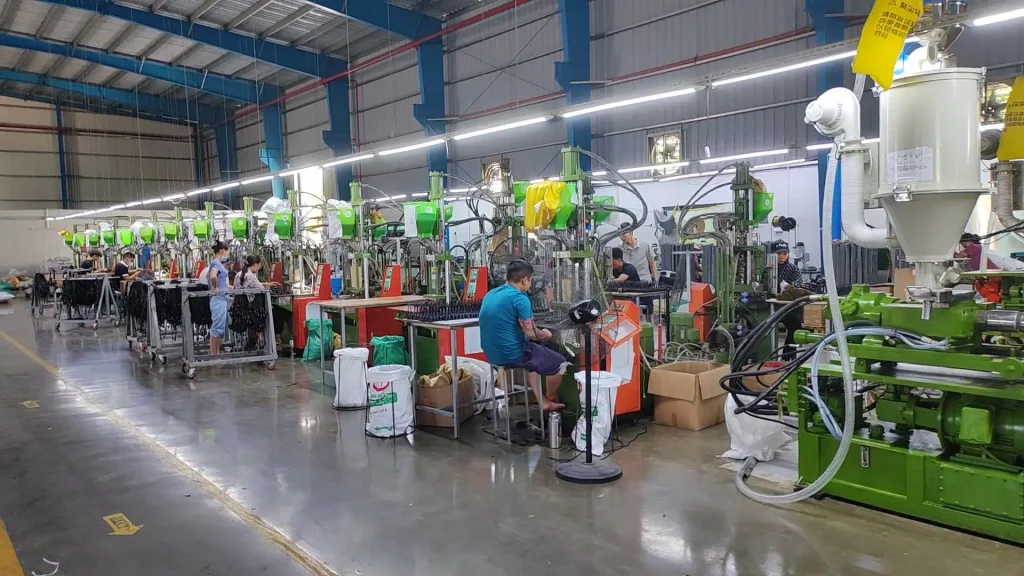
As a pixel lights manufacturer, we want to show you how to make a qualified pixel lights.
Ever looked up at a beautifully lit roofline during the holidays and wondered what it actually takes to make those lights survive freezing snowstorms and scorching summer heat?
If you are a lighting contractor or a smart home brand owner, you already know the ugly truth: a dead pixel on a second-story roof is a costly nightmare. Callbacks eat your profit margins alive. That’s why sourcing from a reliable permanent lights vendor isn’t just about getting a good price; it’s about protecting your business reputation.
I get asked all the time by our B2B partners, “What makes your lights outlast the cheap stuff online?” Today, I’m pulling back the curtain. Let’s take a walk down our production lines and look at exactly how high-grade permanent pixel lights are manufactured, from bare circuit boards to roof-ready kits.
Step 1: The Blueprint (Where OEM & ODM Magic Happens)
Before a single machine is turned on, everything starts in the R&D department. A lot of brands come to us with a specific vision—maybe they need a custom lens angle to create a sharp wall-wash effect, or perhaps they want to integrate a proprietary smart protocol.
Because we specialize in OEM and ODM manufacturing, we don’t just pull off-the-shelf items from a warehouse. We start by looking at the first principles of the client’s request. What is the end user trying to achieve?
Our engineers design the custom PCB (Printed Circuit Board) layout, select the appropriate IC chips (like WS2811, WS2815, or specialized dual-signal chips for backup data lines), and design UV-resistant housings that won’t yellow after two years in the sun. If a brand wants their logo embossed on the track or custom packaging, this is where we map it out.
Step 2: SMT (Surface Mount Technology) – The Heart of the Pixel
Once the design is locked, we move to the SMT workshop. If you step into this room, the first thing you’ll notice is the low, rapid humming of automated placement machines.
This is where the bare PCB gets its components. Solder paste is printed onto the boards with micron-level precision. Then, the high-speed SMT machines shoot the LED diodes, resistors, and IC chips onto the board faster than the eye can track.
Why does this matter to you? Because as a top-tier pixel lights manufacturer, we know that manual soldering for surface-mount components leads to inconsistencies. Automated SMT ensures that every single pixel has a perfect electrical connection, drastically reducing the chance of a “dead diode” once the lights are installed on a house. The boards then go through a reflow soldering oven, baking the components permanently into place.
Step 3: Wire Welding and Injection Molding
Now we have our light boards, but they need to be connected. This is where we solder the high-gauge, cold-resistant copper wires between each pixel. For permanent outdoor lighting, the wire quality is heavily scrutinized. We use specifically formulated thick-gauge wires that prevent voltage drop across long runs of the house.
After wiring, the lights are placed into their plastic housings (usually a highly durable, fire-retardant PC/ABS blend). But at this stage, they are entirely vulnerable to water.
Step 4: Waterproofing (The Dealbreaker for Contractors)
If there is one thing you take away from this article, let it be this: waterproofing is the absolute lifeblood of permanent outdoor lighting.
We don’t rely on cheap silicone rings. Instead, we use an automated PU (Polyurethane) or Epoxy resin potting process. Machines carefully inject the exact volume of liquid glue into the housing, completely burying the PCB and the wire joints.
Once the glue cures, it forms an impenetrable, solid brick inside the casing. This is how we achieve true IP67 and IP68 waterproof ratings. Whether it’s heavy rain, ice buildup, or aggressive pressure washing, the internal electronics are safe. This exact process is why major installation companies trust us as their dedicated permanent lights vendor.
Step 5: The “Burn-In” and Quality Control
We never just pack the lights and ship them. Every single string of permanent lights is hung up on our aging racks.
We run them at full brightness, cycling through extreme color changes for up to 24-48 hours. We want to stress-test the LEDs, the IC chips, and the solder joints before they ever leave the facility. If a pixel is going to fail, we want it to fail in our factory, not on your customer’s roof. We also conduct drop tests, extreme temperature chamber tests, and submersion tests on randomized batches.
The Secret to Supply Chain Stability: China & Vietnam Facilities
Now, let’s talk about the elephant in the room: global supply chain risks.
In recent years, brand owners and large-scale engineering buyers have told me their biggest headache isn’t just finding a good pixel lights manufacturer; it’s dealing with unpredictable tariffs and shipping delays.
We listened, and we solved it. We didn’t just stay local. Today, we proudly operate advanced manufacturing facilities in both China and Vietnam.
- Our China Base: Serves as our heavy-lifting R&D hub and rapid-prototyping center, leveraging the most complete electronic supply chain in the world.
- Our Vietnam Facility: Offers massive, scalable production capacity. For our US and global buyers, our Vietnam factory is a game-changer, providing a legally compliant way to bypass heavy tariffs while maintaining the exact same strict QC standards we developed in our headquarters.
Having this dual-country manufacturing capability means you get ultimate peace of mind. If one region faces logistical hurdles, the other can pick up the slack. Your inventory flow remains uninterrupted.
Let’s Build Something Great Together
Manufacturing permanent pixel lights that actually last is a mix of high-tech automation, rigorous chemical engineering (waterproofing), and obsessive quality control.
Whether you are a B2B lighting contractor looking to cut down on callback rates, or an e-commerce brand looking to launch your own custom line of smart outdoor lights, you need a partner who understands the deep logic behind the product.
Stop settling for middlemen. If you’re looking for a direct OEM/ODM manufacturer with real-world capacity in both China and Vietnam, let’s talk. Reach out to our team today, and let’s illuminate your next big project.
Related Products
- IP68 12V UCS2904 RGBW LED Pixel Light — WiFi/Bluetooth programmable addressable
- LED Pixel Light Aluminum Channel Track — Custom extrusion rail
- MeanWell Potted IP67 Power Supply — 12W-600W outdoor power supply
Related Articles